> For the complete documentation index, see [llms.txt](https://docs.overdare.com/llms.txt). Markdown versions of documentation pages are available by appending `.md` to page URLs; this page is available as [Markdown](https://docs.overdare.com/manual/script-manual/input-and-controls/contextactionservice.md).
# Mobile Input Handling
## Overview
ContextActionService helps effectively manage various input methods such as keyboard, mouse, and touch during gameplay, making it easy to implement context-sensitive interfaces. It allows you to manage player input conveniently and flexibly assign or remove actions based on the game’s context.
## Features
* Can handle multiple input devices such as **keyboards, mice, and touch** in the same way.
* Compatible with both **OVERDARE Studio** environments on PC and **mobile** platforms, simplifying input handling.
* Can enable only the necessary inputs depending on specific situations, such as menu screens or gameplay.
* Provides the ability to distinguish input states via **UserInputState**, allowing for detailed configuration of actions.
## How to Use
### 1. Creating an Action
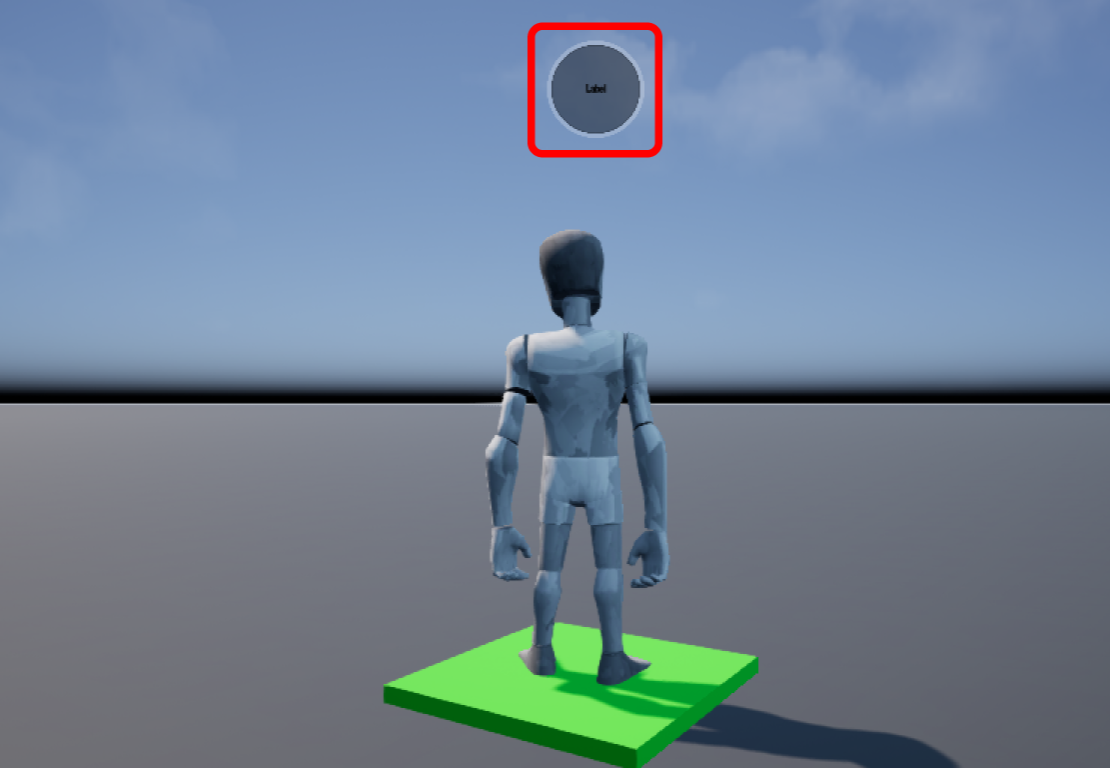
You can create an action using the **BindAction function** in a LocalScript. When creating the action, you can specify the action’s name, whether to create a TouchButton, and the input key to be used on the PC.
```lua
local ContextActionService = game:GetService("ContextActionService")
local ActionName = "JumpAction"
local IsCreateTouchButton = true
local KeyCode = Enum.KeyCode.F
local function OnAction(actionName, inputState, inputObject)
if inputState == Enum.UserInputState.Begin then
print(actionName .. " triggered!")
end
end
ContextActionService:BindAction(ActionName, OnAction, IsCreateTouchButton, KeyCode)
```
The created action can have its text, button image, and position set as follows.
```lua
ContextActionService:SetTitle(ActionName, "TEST")
ContextActionService:SetImage(ActionName, "ovdrassetid://1234")
ContextActionService:SetPosition(ActionName, UDim2.new(0.5, 0, 0.8, 0))
```
### 2. Disabling an Action
When a specific action is no longer needed, such as disabling the attack button when entering a shop, you can deactivate it using the **UnbindAction function**.
```lua
local ContextActionService = game:GetService("ContextActionService")
local ActionName = "JumpAction"
ContextActionService:UnbindAction(ActionName)
```
### 3. Handling Input States
You can implement handling for different input states such as input begin, input change, and input end using **UserInputState**.
```lua
local function OnAction(actionName, inputState, inputObject)
if inputState == Enum.UserInputState.Begin then
print("Begin!")
elseif inputState == Enum.UserInputState.Change then
print("Change!")
elseif inputState == Enum.UserInputState.End then
print("End!")
elseif inputState == Enum.UserInputState.Cancel then
print("Cancel!")
end
end
ContextActionService:BindAction(ActionName, OnAction, IsCreateTouchButton, KeyCode)
```
Type
Description
Begin
When the input starts
Change
When the input is ongoing
End
When the input ends
Cancel
When the input is interrupted (e.g., when the input point moves out of the button area)
### 4. Retrieving a Specific Action
You can retrieve a specific button using the **GetButton function**.
```lua
local ActionButton = ContextActionService:GetButton(ActionName)
```
### 5. Retrieving All Created Actions
You can retrieve all buttons using the **GetAllBoundActionInfo function**.
```lua
local ContextActionService = game:GetService("ContextActionService")
local AllActions = ContextActionService:GetAllBoundActionInfo()
for actionName, actionInfo in pairs(AllActions) do
print("Action Name : ", actionName)
print("Input Types : ", actionInfo.InputTypes)
end
```
## Default Input Handling
### Mobile Joystick, Jump Button Display Control
You can control the visibility of the mobile joystick and jump button using the **SetCoreGuiEnabled function**.
```lua
local StarterGui = game:GetService("StarterGui")
StarterGui:SetCoreGuiEnabled(Enum.CoreGuiType.Joystick, false)
StarterGui:SetCoreGuiEnabled(Enum.CoreGuiType.JumpButton, false)
```
### Mobile Screen Touch Detection
Use the **TouchStarted, TouchMoved, and TouchEnded** **events** to process touch start, movement, and end actions. In the function that connects these events, the input and \_gameProcessed variables are delivered as parameters.
* input: An object containing information related to the touch input point, status, location, etc.
* \_gameProcessed: Returns “true” if the input location overlaps with the UI elements specified below.
* Native UI, such as the chat window
* Basic control buttons, such as the joystick and jump button
* GUI buttons for which “Active” is “true”
* Actions bound to “BindAction”
```lua
local UserInputService = game:GetService("UserInputService")
local ActiveTouches = {} -- Table for individually processing multiple touch inputs that occur simultaneously
local function OnScreenTouchStart(input, _gameProcessed)
local keyCode = input.KeyCode
if keyCode == Enum.KeyCode.Joystick then
return
end
table.insert(ActiveTouches, input)
local inputState = input.UserInputState -- Begin
local inputType = input.UserInputType -- Touch
local delta = input.Delta
local pos = input.Position
-- Do Something
end
UserInputService.TouchStarted:Connect(OnScreenTouchStart)
local function OnScreenTouchMove(input, _gameProcessed)
local keyCode = input.KeyCode
if keyCode == Enum.KeyCode.Joystick then
return
end
for i = 1, #ActiveTouches do
-- Searches for touches that correspond to the current input among multiple touch inputs
if input == ActiveTouches[i] then
local inputState = input.UserInputState -- Change
local inputType = input.UserInputType -- Touch
local delta = input.Delta
local pos = input.Position
-- Do Something
end
end
end
UserInputService.TouchMoved:Connect(OnScreenTouchMove)
local function OnScreenTouchEnd(input, _gameProcessed)
local keyCode = input.KeyCode
if keyCode == Enum.KeyCode.Joystick then
return
end
local i
for j = 1, #ActiveTouches do
if input == ActiveTouches[j] then
i = j
break
end
end
local inputState = input.UserInputState -- End
local inputType = input.UserInputType -- Touch
local delta = input.Delta
local pos = input.Position
-- Do Something
table.remove(ActiveTouches, i)
end
UserInputService.TouchEnded:Connect(OnScreenTouchEnd)
```
### Mobile Joystick Input Detection
```lua
local UserInputService = game:GetService("UserInputService")
local function OnJoystickStart(input, _gameProcessed)
local keyCode = input.KeyCode
if keyCode ~= Enum.KeyCode.Joystick then
return
end
local inputState = input.UserInputState -- Begin
local inputType = input.UserInputType -- Touch
local delta = input.Delta
local pos = input.Position
-- Do Something
end
UserInputService.TouchStarted:Connect(OnJoystickStart)
local function OnJoystickMove(input, _gameProcessed)
local keyCode = input.KeyCode
if keyCode ~= Enum.KeyCode.Joystick then
return
end
local inputState = input.UserInputState -- Change
local inputType = input.UserInputType -- Touch
local delta = input.Delta
local pos = input.Position
-- Do Something
end
UserInputService.TouchMoved:Connect(OnJoystickMove)
local function OnJoystickEnd(input, _gameProcessed)
local keyCode = input.KeyCode
if keyCode ~= Enum.KeyCode.Joystick then
return
end
local inputState = input.UserInputState -- Change
local inputType = input.UserInputType -- Touch
local delta = input.Delta
local pos = input.Position
-- Do Something
end
UserInputService.TouchEnded:Connect(OnJoystickEnd)
```
%20(1)%20(1)%20(1)%20(1)%20(1)%20(1)%20(1)%20(1)%20(1)%20(1)%20(1)%20(1)%20(1)%20(1)%20(1)%20(1)%20(1)%20(1)%20(1).png)